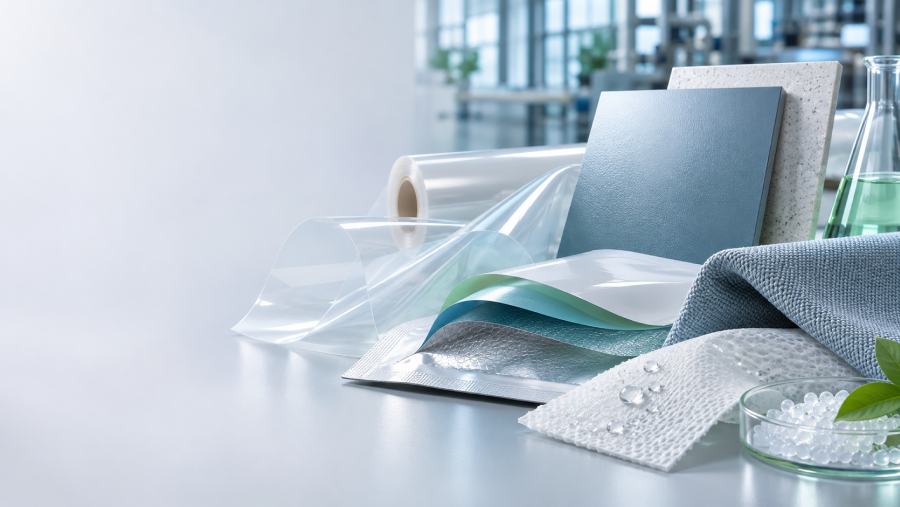
A product’s material is no longer just a choice of cost and shape. Packaging that helps preserve food, fabrics that keep their freshness, paints that simplify maintenance and surfaces that are easier to clean show a trend: the function of the product is now born in the material itself. For industry, understanding this movement helps prioritize R&D investments and choose technology partners.
In this article, you will see what advanced materials are, the five movements that guide the sector, how science reaches the product and what to watch in the coming years.
What advanced materials are
Advanced materials are developed with controlled composition and structure to deliver specific functions, such as gas barrier, strength, lightness, hygiene or renewable origin. Performance is measured in tests, and the function is integrated into the product rather than applied after manufacturing.
Five movements that guide the sector
1. Hygiene and safety built into the material
Antimicrobial technologies integrated into the formulation help reduce the colonization of microorganisms on the surface of frequently used products. The article on industrial microbiological control presents the fundamentals of the topic.
2. Active and intelligent packaging
Packaging with active agents that control microorganisms and gases extends the shelf life of food and helps reduce losses along the supply chain. The content on shelf life of fresh foods shows how this technology works.
3. Sustainability and renewable origin
Biomaterials, bio-based blends and recyclable materials gain ground as environmental goals and packaging rules advance. The relationship between sustainable innovation and antimicrobial technology appears in the article on bioplastics.
4. Durability and extended service life
Products that maintain performance for longer reduce replacement, losses and maintenance costs over the life cycle.
5. Technical and regulatory proof
Test reports, assays and certifications become a condition for entering markets and for customer trust. The article on EPA and FDA certifications for antimicrobials presents an example of this movement.
From science to product
The path between a discovery and an industrial product goes through steps repeated in every project: defining the challenge, laboratory development, performance tests, pilot batch, industrial scale and technical and regulatory documentation. The article on how solution development works from the laboratory to the market details this journey.
Where advanced materials already appear
- Packaging and food: films and plastics with active agents for preservation and hygiene.
- Textile: fabrics with antimicrobial protection for uniforms, linens, sportswear and rugs. The article on sustainable fashion shows the relationship with the environment.
- Construction: paints, coatings and mortars focused on finish durability and practical cleaning.
- Healthcare and collective use: surfaces that are easier to clean in high-traffic environments.
- Polymers and household goods: bottles, utensils and components for recurring use.
What to watch in the coming years
- Technical evidence before the promise: test data drives the purchase decision and communication to the end customer.
- Regulatory requirements by market: each destination has its own lists and rules, and they evolve.
- R&D partnership with suppliers: tailored development shortens the path between idea and product.
- Life cycle cost: durability, maintenance and losses weigh as much as the price of the material.
- Clear communication of the benefit: the end customer values attributes they can understand, such as hygiene, durability and ease of cleaning.
Frequently asked questions
What distinguishes an advanced material from a conventional one?
An advanced material is designed to deliver a specific function, with performance measured and documented in tests.
Who usually adopts advanced materials?
Adoption generally starts with industries that have structured R&D, Quality or Engineering areas, because the process involves testing, validation and integration into production.
Where to start a project?
With the product’s pain point, such as hygiene, service life or durability, and with the choice of a pilot project with defined success criteria.