
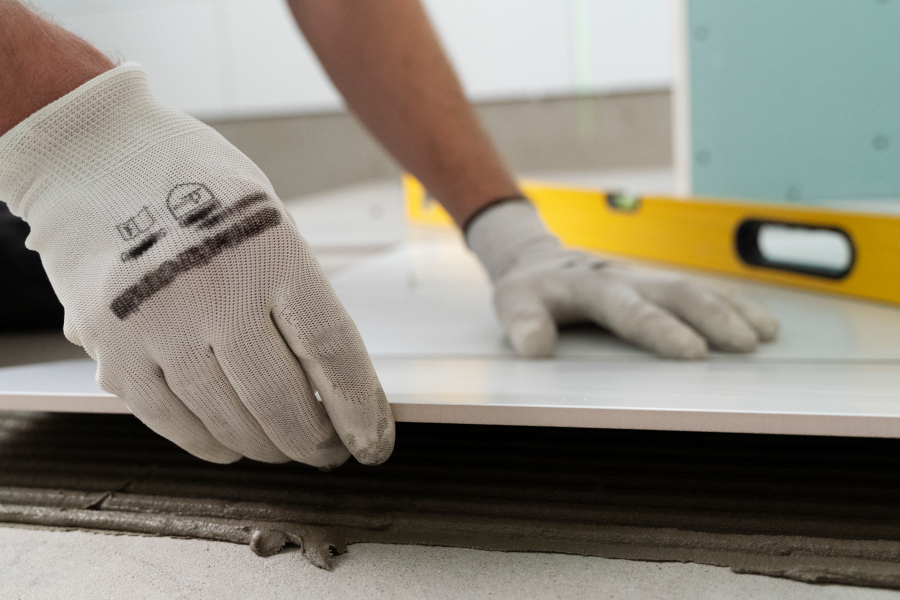
A recently renovated bathroom, a facade exposed to rain, a common area floor in constant use. Within a few months, dark stains and a musty odor appear, even with regular cleaning products. This scenario repeats across residential, commercial and industrial projects, and it has a clearly defined technical cause.
Why coatings lose quality over time
Constant moisture, thermal variation and direct contact with people create ideal conditions for fungi and bacteria to proliferate on paints, mortars, floors and ceramic coatings. As microbial colonization advances, the material shows stains, color changes and odor, well before the manufacturer’s expected timeline.
What changes with technology using particles
Incorporated into the material matrix, antimicrobial technology using particles reduces the multiplication of fungi and bacteria on the surface. In practice, this means:
Without antimicrobial protection
| With technology using particles
|
Stains and odor within a few months
| Appearance preserved for longer
|
Frequent cleaning and harsh products
| Reduced maintenance
|
Accelerated deterioration in humid areas
| Extended durability even with continuous exposure
|
Where protection makes a difference
Manufacturers of paints, ceramic coatings, mortars and plastic materials apply the technology directly into the product formulation, without altering its mechanical or visual properties. The result reaches residential, commercial and industrial projects, especially in areas with high moisture exposure.
A technical argument for specification
Architects, engineers and purchasing teams increasingly evaluate total cost across the building life cycle, not only the initial material cost. A finish with proven antimicrobial protection becomes a technical differentiator in specification processes and bids.